
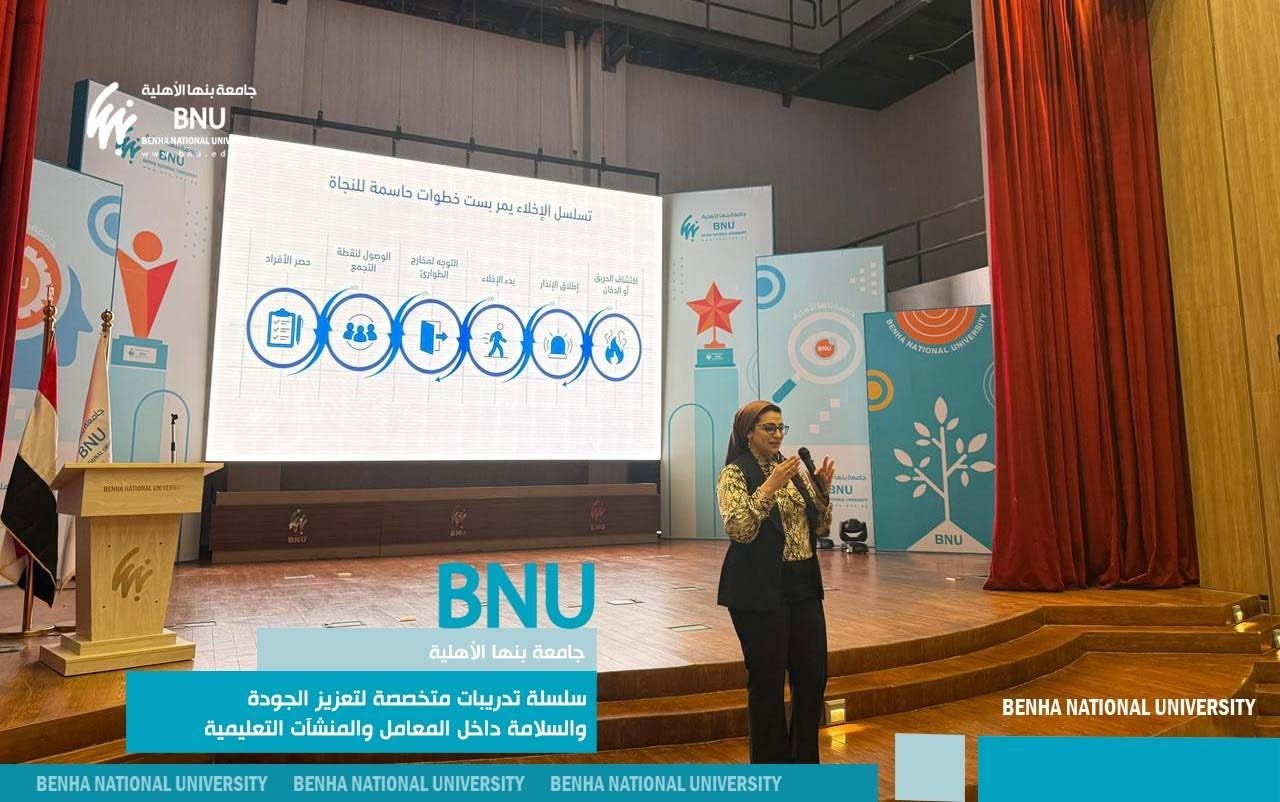
Benha National University has delivered a series of specialized professional training programs aimed at strengthening quality assurance and safety practices across its laboratories and educational facilities. The initiative forms part of the University's ongoing commitment to fostering a culture of quality, enhancing operational excellence, and ensuring that laboratory and facility personnel are equipped with the knowledge and competencies required to maintain safe and effective learning and research environments.
Designed for laboratory technicians and staff working across the University's educational facilities, the program focused on laboratory quality standards, occupational safety, emergency preparedness, and risk mitigation.
The training series featured three specialized workshops led by experts in engineering, laboratory safety, and critical care medicine.
Dr. Dina El-Naggar, Lecturer at Benha National University’s Faculty of Engineering, delivered a session on laboratory fire safety, focusing on prevention, emergency response, and evacuation procedures. The workshop examined the causes and risks associated with laboratory fires, the principles of fire behavior and suppression, fire classifications, and the appropriate selection and use of fire extinguishers in accordance with the PASS methodology. Participants also explored common laboratory hazards, particularly electrical and chemical risks, alongside emergency response protocols and evacuation procedures. The session underscored the importance of preventive practices, preparedness, and coordinated response in safeguarding people, facilities, and research assets.
Dr. Manal Sultan, a specialist in laboratory safety and security, led a workshop on the implementation of laboratory quality and safety procedures. The training addressed quality assurance requirements, occupational health and safety practices, the safe handling of chemicals and laboratory equipment, hazardous materials management, chemical waste disposal procedures, emergency preparedness measures, and the effective use of personal protective equipment. The session highlighted the critical role of these practices in maintaining safe, efficient, and compliant laboratory operations.
Prof. Ahmed Mostafa, Head of the Critical Care Department, delivered a specialized first-aid training workshop covering the essential principles of emergency response and immediate intervention prior to the arrival of professional medical assistance. Participants received practical guidance on casualty assessment, scene safety, the management of common emergencies including fainting, choking, bleeding, burns, and fractures, as well as the fundamentals of cardiopulmonary resuscitation (CPR) and the effective use of first-aid equipment.
The program attracted strong engagement from participants through interactive discussions and practical exercises designed to strengthen awareness of quality and safety standards while enhancing preparedness for potential risks and emergency situations.
These training initiatives reflect Benha National University’s continued investment in the professional development of its technical and administrative workforce and its commitment to strengthening institutional quality and safety frameworks in line with recognized professional standards and best practices.