
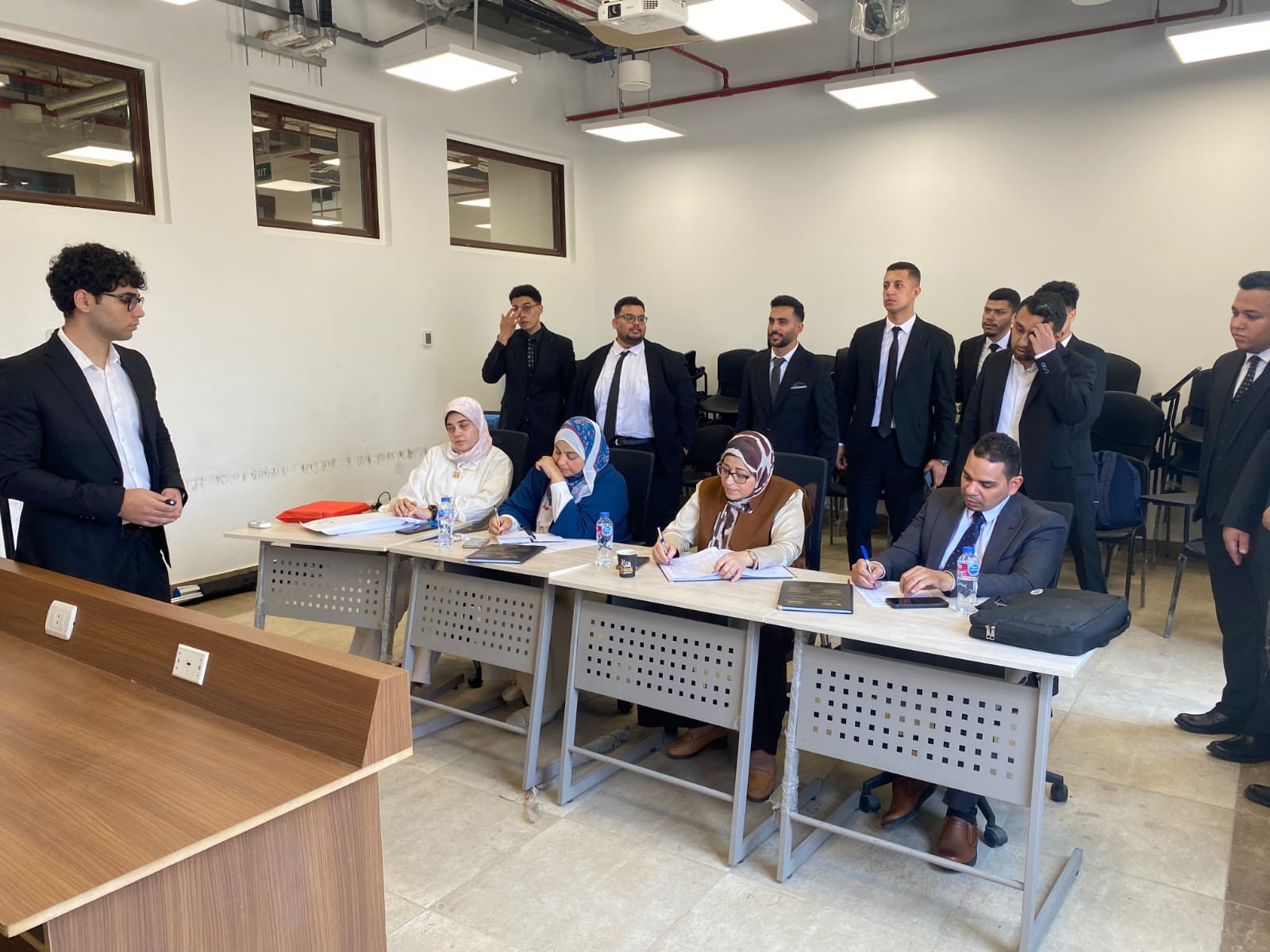
Benha National University's Faculty of Computer Science concluded graduation project presentations for students enrolled in the Artificial Intelligence and Machine Learning and Software Development and Applications programs, showcasing 25 innovative projects that demonstrated students' ability to develop advanced digital solutions addressing real-world challenges across multiple sectors.
The presentations were held under the leadership of Prof. Tamer Samir, President of Benha National University, and Prof. Hussein El-Maghraby, Vice President for Academic Affairs, with academic supervision provided by Prof. Eman Abdel Ghaffar, Acting Director of Programs, Faculty of Computer Science. The evaluation panels included distinguished academics in computer science and information technology from Egyptian universities.
The 25 graduation projects reflected a high standard of academic achievement and technical excellence, highlighting students' ability to apply emerging technologies to practical challenges while responding to the evolving needs of society and the digital economy.
Prof. Tamer Samir noted that the projects demonstrate the remarkable potential of Egypt's young talent to innovate across rapidly evolving technology fields. He emphasized that Benha National University remains committed to providing an academic environment that promotes excellence in education, encourages innovation, and enables students to develop advanced digital solutions that address societal needs while supporting digital transformation and the transition toward a knowledge-based economy in line with Egypt Vision 2030.
Prof. Hussein El-Maghraby stated that the University continues to develop its academic programs to ensure closer integration between academic study and practical application. He noted that this approach equips students with the technical expertise and professional competencies required to develop competitive projects capable of keeping pace with rapid advances in artificial intelligence, data science, and software engineering.
He added that the breadth and diversity of this year's projects reflect the Faculty's success in fostering a culture of innovation and entrepreneurship while preparing graduates capable of developing technology-driven solutions that contribute to a wide range of productive and service sectors.
The projects demonstrated the effective application of artificial intelligence, machine learning, computer vision, and data analytics to address challenges across several strategic sectors. Students developed innovative digital solutions spanning healthcare, industry, tourism, education, public services, and smart technologies, reflecting both the diversity of their ideas and their ability to transform emerging technologies into practical applications with measurable societal impact.
Across the healthcare sector, students developed intelligent solutions for hospital and clinic management, AI-powered medical image analysis to support disease diagnosis, and digital pharmacy applications designed to connect patients with medication providers more efficiently.
Industrial applications focused on intelligent maintenance management systems, vehicle monitoring platforms, and AI-driven predictive maintenance solutions aimed at improving operational performance and efficiency across industrial environments.
The projects also explored technology-enabled solutions for the tourism sector. Students applied computer vision to develop interactive platforms capable of recognizing Egyptian archaeological sites, creating immersive digital experiences that promote Egypt's cultural heritage through emerging technologies.
In the field of public safety, several projects introduced intelligent surveillance systems powered by computer vision to enhance situational awareness and support faster response capabilities.
Innovation extended beyond sector-specific applications to include a wide range of public services. Students presented AI-powered applications for university service management, interview analysis, and customer support using Egyptian Arabic dialect conversational models, alongside smart transportation solutions and digital fashion platforms that demonstrated the versatility of artificial intelligence across everyday applications.
Education was another major focus of the projects. Students developed intelligent platforms for academic advising, graduation project management, and learning management, in addition to solutions built on AI agents and advanced image and video processing technologies to support the development of next-generation digital learning environments.
Several projects also reflected a strong commitment to accessibility and inclusive technology. Students developed intelligent navigation systems to assist individuals with visual impairments, as well as AI-powered solutions for recognizing Arabic Sign Language, demonstrating how emerging technologies can contribute to greater accessibility and social inclusion.
Prof. Eman Abdel Ghaffar, Acting Director of Programs, Faculty of Computer Science, noted that this year's graduation projects demonstrated students' success in applying emerging technologies to address real-world challenges across healthcare, industry, tourism, education, and public services. She added that the projects represent the culmination of months of research, software development, testing, and continuous refinement, with several showing strong potential to evolve into scalable digital products and commercial ventures, further reinforcing the University's commitment to innovation and entrepreneurship.
At the conclusion of the presentations, the evaluation panels commended the academic and technical quality of the projects, highlighting the students' innovative thinking, technical proficiency, and forward-looking approaches to solving complex challenges. They noted that the projects reflect the quality of education delivered by Benha National University's Faculty of Computer Science and demonstrate the University's continued success in preparing highly skilled technology graduates equipped to innovate, compete, and contribute to the advancement of artificial intelligence and digital transformation.